THE BLEND MAG
Exploring Asia’s Best in Lifestyle.
By The Blend Mag Editorial Team
Walk into almost any beautifully designed home, and your eyes will probably land on the furniture first. The sculptural sofa. The marble coffee table. The statement artwork.
But stay a little longer, and you'll notice something else entirely. It's the warm pool of light falling onto the dining table. The bedside lamp that softens the room after midnight. The quiet glow that makes an ordinary apartment suddenly feel deeply personal. Furniture fills a room. Lighting decides how it feels.
That simple belief sits at the heart of Fig Living, an Indian design brand rethinking not just lighting, but how people experience their homes.

"We're just not a lighting brand", founder Sushant Sharma tells us. "We are a light and living brand"
It's a subtle distinction, but one that explains almost everything about how Fig Living thinks about the home category.
Not because lighting felt like an easier category, but because it felt like the most important one. "I've always believed lighting is the first layer of any home," Sharma says. "It creates drama, emotion and character." It's difficult to disagree. A beautifully designed chair can disappear under harsh white lighting.
A modest apartment can suddenly feel cinematic beneath a warm glow. Lighting doesn't simply illuminate objects. It changes how we experience them. More importantly, it changes how we experience ourselves inside those spaces. Morning coffee tastes different beside a softly lit window. Conversations linger longer around a warm dining table. Even solitude feels gentler beneath the right lamp. Fig Living builds around these moments. Not products. But experiences.

Although Fig Living feels unmistakably contemporary, its roots stretch back much further. For over three decades, Sharma's family business, Inmark Exports, designed and manufactured home products for some of the world's most respected brands, including MoMA, Urban Outfitters and others. Years spent building for global markets taught him that great design isn't defined by geography. It's defined by how naturally it fits into people's lives. "We never wanted to build an Indian design brand," he says. "We wanted to build a great design brand from India."
Over the years, Sharma watched lamps become silent participants in everyday rituals. Reading before bed, hosting friends, celebrating milestones, finding stillness after exhausting workdays.
"The bedside lamp quietly becomes part of your nightly ritual," he says. "The dining table becomes where families reconnect." Good lighting rarely demands attention. It simply makes life feel better.
The timing for Fig Living wasn't accidental. Over the last few years, India's relationship with home design has fundamentally changed. Young homeowners began questioning inherited interiors.
Consumers became increasingly willing to choose functionality over decorative excess. "They wanted to choose differently than their parents," Sharma explains. That shift created an opportunity. Not for another décor company. But for a brand willing to build around how modern India actually lives. Because today's home is no longer just where people sleep. It's where they work, host friends, recharge, and create. And increasingly, where they spend their most meaningful hours.
There's a phrase Sharma credits to his father. "Furniture fills a home. Architecture gives it structure. Lighting gives it soul." Few sentences explain contemporary living more elegantly. As homes have become multifunctional spaces, lighting has quietly evolved from necessity into atmosphere. It's no longer about brightness. It's about emotional calibration. Warm light for slow evenings. Focused light for work. Ambient light for conversations. The lamp itself almost disappears. What remains is the feeling it creates. Perhaps that's why Fig Living refuses to think of lighting as decoration. Instead, every product begins with a deceptively simple question. Does this genuinely improve someone's life?

In an industry increasingly driven by aesthetics, Fig Living insists on starting somewhere else entirely. Function. In fact, the brand's name is an acronym. Fig stands for Functionality Inspired Goods. It's less a slogan than a design framework. Before asking whether something looks beautiful, Sharma asks whether it deserves to exist. Does it solve a real problem?
Is it intuitive? Easy to assemble? Simple to ship? Does it improve everyday life while elevating the space around it? Only then does design begin. Interestingly, this philosophy extends well beyond lighting. Today, Fig Living also creates side tables, vases and home objects, each developed through the same lens. Not trend forecasting. Human behaviour. The result feels refreshingly restrained. Rather than chasing Scandinavian minimalism one season and maximalist interiors the next, Fig Living creates products that quietly integrate into daily life. For Fig Living, timelessness is rarely a design style. It's the outcome of solving the right problem well.

Ask Sharma what transforms a lamp into something emotionally significant, and his answer has very little to do with design. "It depends on how people use it." The joy of assembling it. The satisfaction of placing it inside a favourite corner. Watching it become part of everyday routines.
Homes are intensely personal spaces. No designer, regardless of talent, can dictate how an object will ultimately be loved. Designers create the object. Customers give it meaning. A lamp becomes meaningful not when it's purchased, but when it quietly joins someone's life. That reading corner, or that evening ritual, even that conversation after dinner. Over time, the object fades. The only thing that remains is feeling.
Sharma believes the meaning of luxury has quietly changed.
Unlike fashion or technology, buying something for the home rarely happens impulsively. It's an unusually intimate decision. Because unlike a handbag or a phone, you'll live with that object every single day. Today's consumers aren't necessarily searching for expensive products. They're searching for thoughtful ones. Pieces that reflect personality. Solve practical problems. Feel intentional. "They care about quality, functionality and thoughtful design," Sharma says. "Not just premium price tags." It's a shift visible across the broader luxury landscape. Consumers increasingly value usefulness over status. Longevity over novelty. Meaning over spectacle. And home design has quietly followed suit.
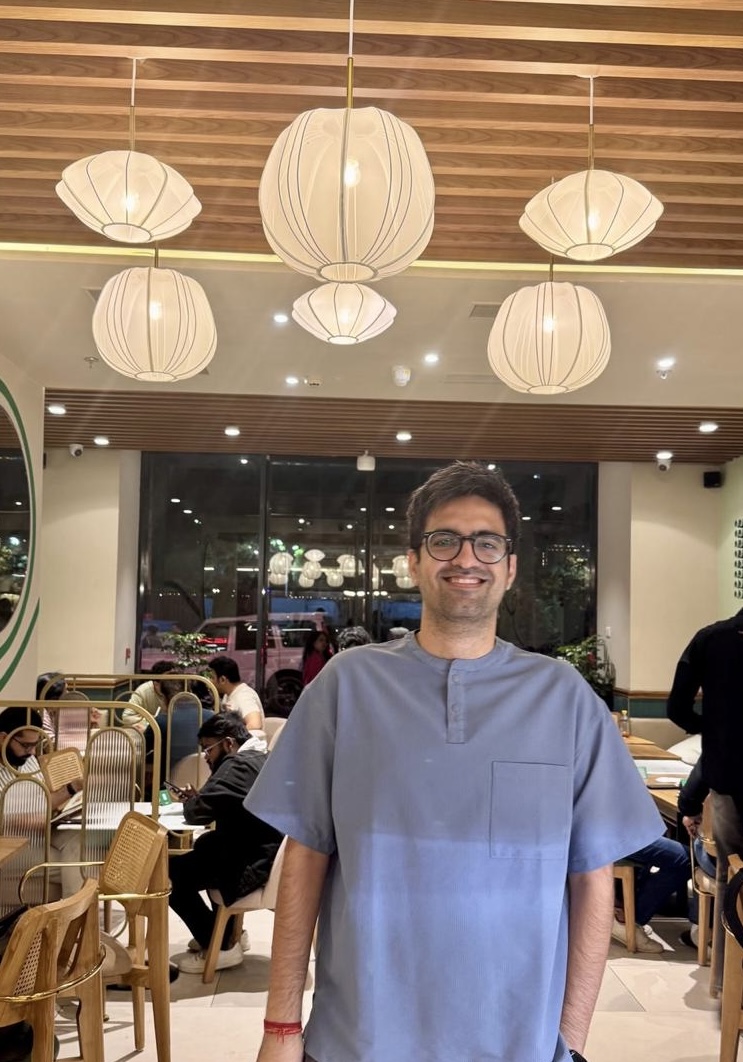
Startup culture loves talking about product-market fit. Sharma smiles at the phrase. "We were never trying to find product-market fit." After decades spent manufacturing for global brands, confidence in product quality already existed. The challenge wasn't designing better lamps. It was finding the community that valued thoughtful design. Today, that community has grown dramatically. Within its first year, Fig Living crossed 10,000 direct-to-consumer orders. Since then, that number has quietly tripled. More than 30,000 homes have now chosen Fig Living. For Sharma, the milestone represents something deeper than growth. Validation. Proof that a growing generation of Indian consumers wants homes designed around intention rather than excess.
Perhaps the most revealing part of our conversation comes when Sharma describes the legacy he hopes Fig Living leaves behind. He doesn't mention awards. Or market share. Or becoming India's biggest lighting company. Instead, he talks about a very specific window of time. 5 p.m. to 9 a.m. The hours after work. The hours when people finally become themselves again.
"Our ambition is simple," Sharma says. "We want to own the after-hours." Not the hours spent working. The hours spent living. The time between 5 p.m. and 9 a.m., when lights dim, you slow down, books come off the shelf, and homes finally feel like home. Every product Fig Living creates is designed with those hours in mind.
The brand isn't standing still. Chrome and stainless-steel collections are already on the way. New semi-knockdown side tables designed for efficient assembly will launch soon. Artist-led collaborations are quietly in development, bringing together the worlds of fashion and interiors in unexpected ways.
Yet despite expanding categories, the philosophy remains unchanged. Every product must justify its place inside someone's home. Not through visual drama alone. But through usefulness.

As our conversation comes to a close, we ask Sharma one final question.
What does good design mean to you?
He pauses for a moment before answering. "I don't think design belongs to a country anymore."
"The best products in the world aren't successful because they're American, Scandinavian or Japanese. They're successful because they're thoughtfully designed. They work just as well in New York as they do in Bengaluru."
He believes the same convergence is happening in homes. Consumers across the world are increasingly drawn to the same principles: functionality over excess, timelessness over trends, and products that quietly improve everyday life. Good design is becoming universal.
"We don't design for India," he says. "We design from India, with the world in mind."
Perhaps that's the most revealing insight about Fig Living. It's easy to think the company makes lamps, tables and home objects. But that's only what it sells. What it's really building is a belief that great design doesn't need a passport. It only needs a purpose.