THE BLEND MAG
Exploring Asia’s Best in Lifestyle.
There are some things women curate with extraordinary care.
The jacket bought in a hidden bazaar abroad. The ceramic cup carried home wrapped in newspaper. The perfume attached to a specific season of life. Objects with memory stitched into them. Objects that mean something.
For Tanvi Ghate, it was a suzani jacket from Bukhara.
“I know the man who made it,” she tells us. “I know which bazaar, which stall, which conversation.”
She speaks about clothing the way some people speak about relationships: emotionally, specifically, almost reverently. Every object in her life carries provenance. A story. A feeling.
Except, for the longest time, what she wore underneath it all.
That disconnect became the beginning of Olakh.
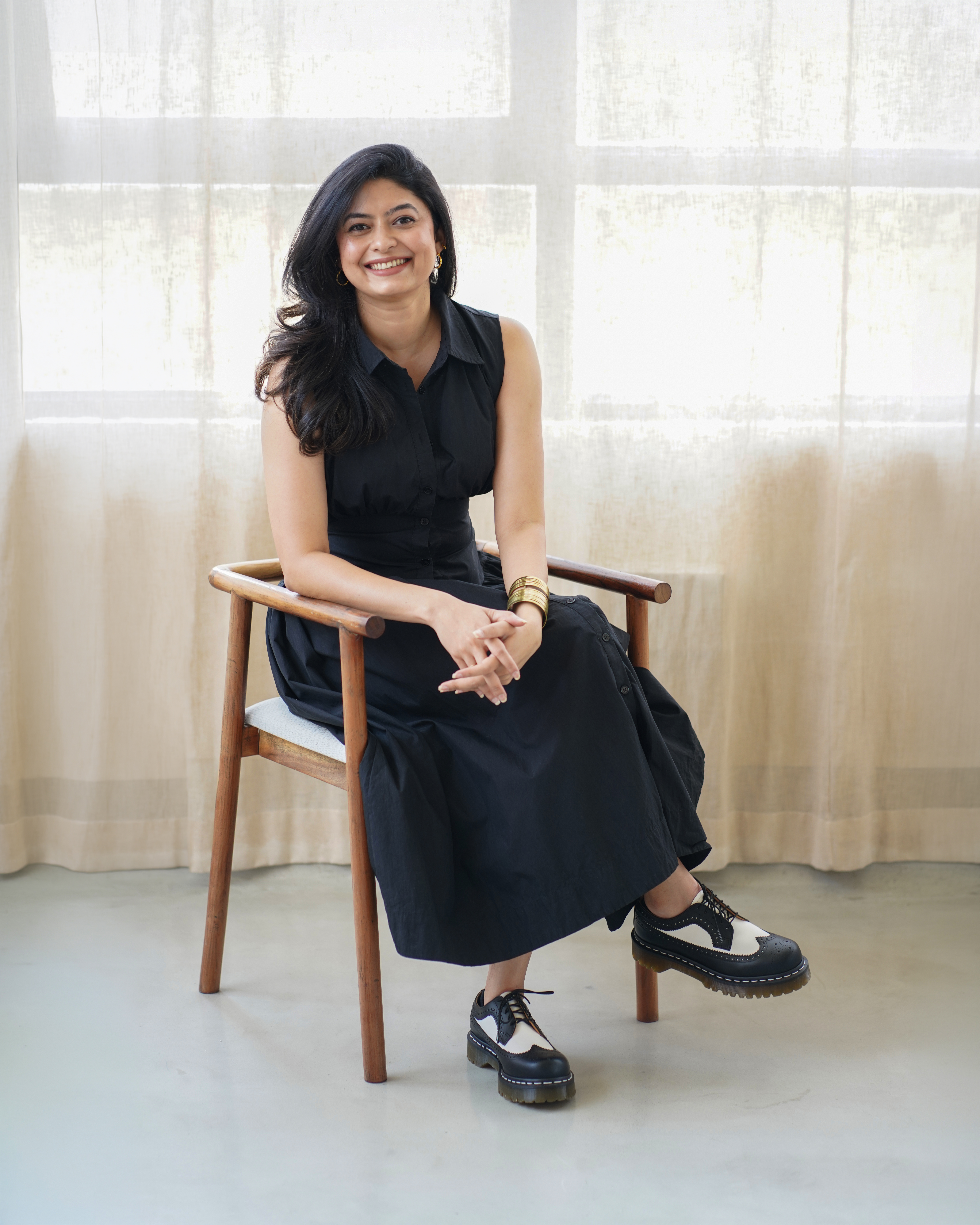
When she started talking to friends, she realised the indifference wasn’t hers alone. Women who were intentional in every other part of their lives; women with taste, discernment, emotional connection to what they owned, had somehow accepted disappointment when it came to lingerie. `
“Nobody was happy with what they wore,” Tanvi says. “But more than that, nobody had ever expected to be.”
That, more than market opportunity or trend forecasting, felt like the real problem.
And perhaps that’s what makes Olakh feel different from most luxury lingerie brands emerging in India today. It was never built around seduction first. It was built around recognition.
Not the performance of femininity, but the experience of it.
The idea for Olakh arrived at the intersection of three parallel journeys: understanding herself more deeply as a woman, rediscovering India, and noticing a category that had remained culturally stagnant.
At the time, Tanvi was travelling extensively while simultaneously stepping back from the frameworks she had long inhabited; law, venture capital, corporate India. What emerged during that period was a growing frustration with the way India was being interpreted globally.
“India was being bucketed into the same three or four narratives,” she says. “The value-conscious consumer. Yoga, turmeric, embellishment, chaos.”
None of it was entirely false. But it felt incomplete.
“The India I see has precision. Restraint. Centuries of craft held to standards most of the world stopped bothering with.”
And yet, lingerie as a category seemed untouched by that reality. Functional. Disposable. Devoid of emotional language.
“There was no soul, no provenance,” she says. “A commodity.”
The question that stayed with her was deceptively simple: why has India never had its own language of lingerie?
Olakh answered.
Luxury lingerie has historically existed within a narrow framework, one shaped less by women and more by how women were expected to be seen.
Tanvi traces the lineage almost academically.
“In the 1800s, lingerie was architecture,” she says. “Corsets sculpting women into the silhouette society demanded.” Then came the spectacle-driven era of hyper-performative lingerie marketing. Push-up bras. Perfect bodies. Desire directed outward.
Even later conversations around inclusivity and body positivity, she argues, still centred visibility over experience.
“The frame hadn’t shifted.”
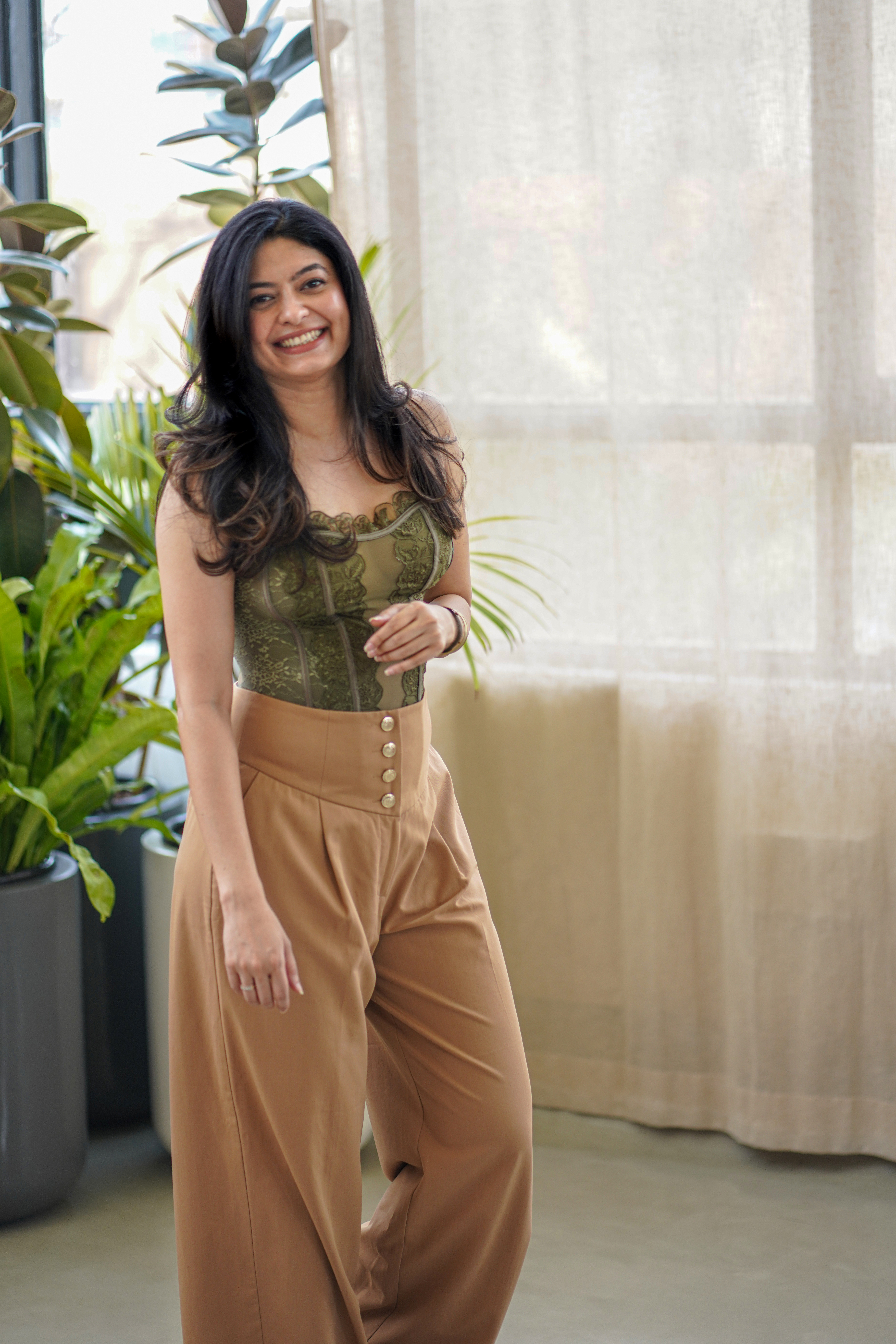
It was only during the pandemic, when women were left alone with themselves and their comfort, that something fundamentally changed.
“Suddenly, the audience for lingerie was the woman herself.”
The question evolved too.
Not: How do I want to be seen?
But: How do I want to feel?
“That is the only question that has ever interested me.”
This philosophy sits quietly at the core of Olakh. The pieces feel sensual, yes, but never performative. Soft, but never fragile. Beautiful without demanding spectacle.
And perhaps most radically, they are designed for the woman wearing them first.
One of the biggest assumptions Tanvi continues to challenge is the industry’s insistence that lingerie can either feel good or look beautiful, but never both.
The divide had become deeply internalised. Comfort belonged to practicality. Craft belonged to performance.
Olakh refuses that separation.
Its design language merges softness with structure, sensuality with wearability, creating pieces that feel emotionally resonant rather than merely decorative.
“Why should comfort or drama be a choice?” Tanvi says later, laughing.
That duality defines the brand.
Lace remains her obsession; an enduring material through which Olakh explores intimacy, texture, and femininity. But unlike traditional luxury lingerie brands, the intention isn’t transformation.
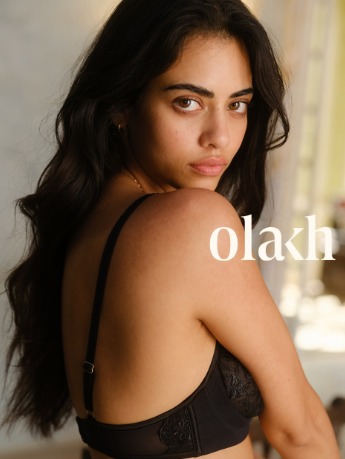
It’s recognition.
“The heroine in most stories doesn’t gain new powers,” Tanvi says thoughtfully. “She realises the ones she had all along.”
That idea lingers throughout every conversation about Olakh.
The brand is not interested in creating a “new woman.” It is interested in helping women return to themselves.
Not louder. Not more desirable. Simply more recognised.
That emotional subtlety is perhaps what makes the brand resonate so deeply. In a culture saturated with aspirational imagery and polished perfection, Olakh speaks instead about identity.
Or as she puts it in one word:
“Pehchaan.”
Recognition. Selfhood. Identity.
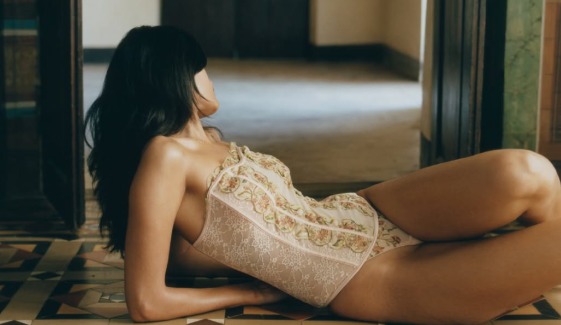
From the outside, entrepreneurship, especially in fashion, often appears cinematic. Beautiful campaigns. Elegant launches. A founder with a point of view.
The reality, Tanvi says plainly, is far lonelier.
“It’s isolating. There’s no softer way to say it.”
After fifteen years in law and venture capital, she had grown accustomed to systems, language, institutional validation. Building Olakh meant stepping outside all of it.
“When you start building something from nothing, you start from Day 0,” she says. “Nobody owes you anything.”
What followed was not just the process of building a company, but rebuilding identity itself.
“In VC, I was the investor. In law, I was the lawyer,” she says. “When you strip all of that away and ask who you are when nobody’s watching, it takes a while to find the answer.”
“I’m still finding it.”
And maybe that honesty is what gives Olakh its emotional clarity. The brand doesn’t pretend certainty. It embraces becoming.
Tanvi believes Indian women are changing; slowly, but undeniably.
“There are years of conditioning to undo,” she says.
Women have long been taught that innerwear is purely functional. That beauty comes at the cost of comfort. That what exists unseen does not deserve attention.
But the shift has already begun.
“She is spending on herself with intention,” she says. “The desire to unlearn is already there.”
Olakh’s role, then, is not simply to sell lingerie. It is to offer women something worth choosing for themselves.
Not for visibility. Not for validation.
But for intimacy with self.
Beyond growth metrics or expansion plans, the cultural impact Tanvi hopes Olakh leaves behind is deeply personal.
“I just want women to reclaim their identities,” Tanvi says. “To choose themselves, every day.”
And perhaps that is what Olakh truly represents.
Not lingerie as spectacle.
Not femininity as performance.
Not luxury as excess.
But softness with character.
Sensuality with selfhood.
And intimacy without apology.
In a world constantly asking women who they should become, Olakh quietly asks a different question:
What if you simply returned to yourself?